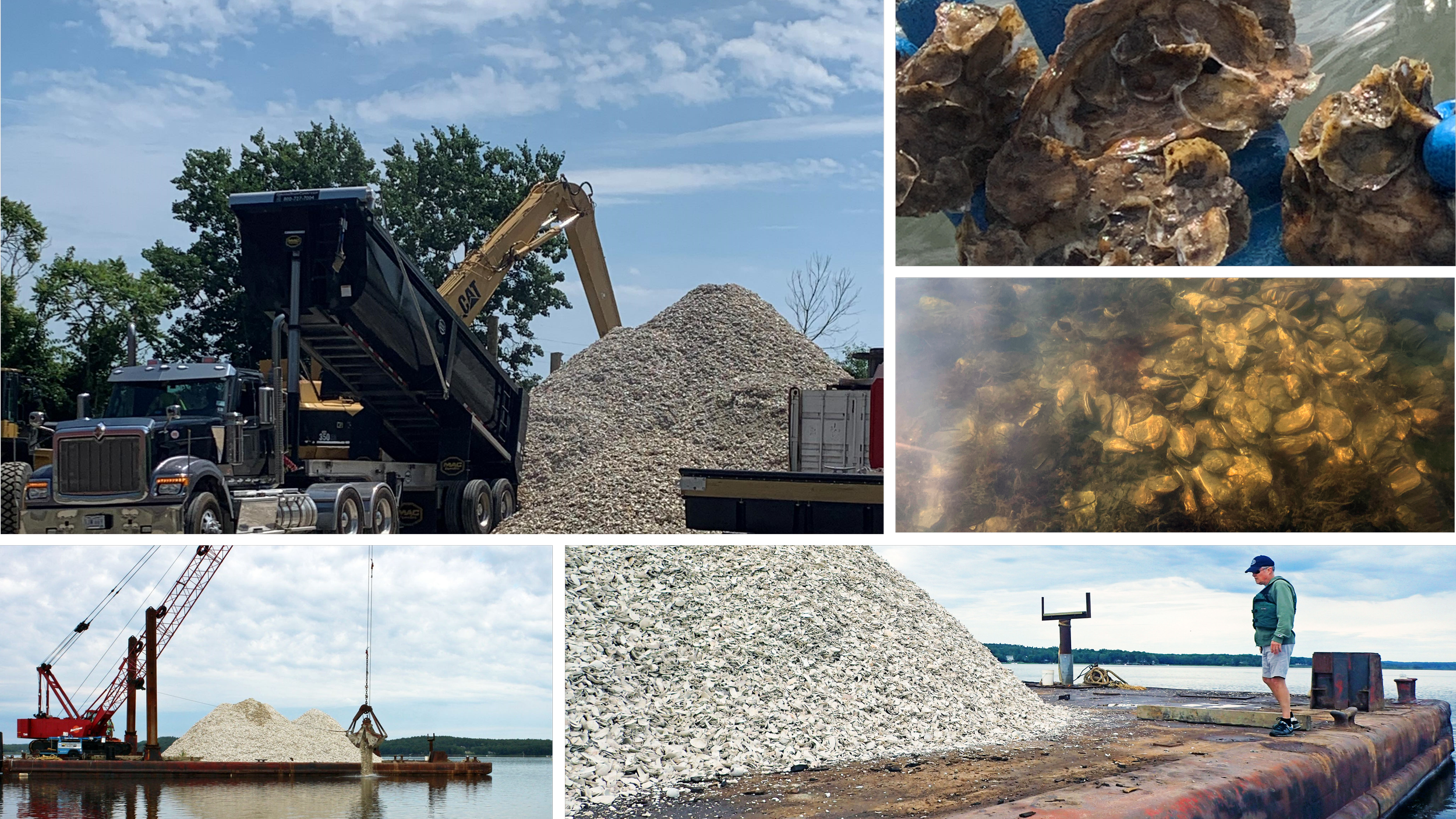
Salty Girlz oysters on the farm
The Restoration process
Oyster farms are relatively new to New Hampshire's coastal waters and our estuary. We take pride in our NH brand oyster. The farms here are small and the farmers are local.
The Need for oyster reef restoration in NH
Oysters in New Hampshire are managed as both a food resource for humans and as an ecological resource contributing to the overall health of our estuarine waters. Natural oyster reefs and hard substrate have been declining due to disease and sedimentation. The shell we’re placing on the bottom is meant to serve as hard substrate for naturally occurring oyster larvae to set on. The shell can help stabilize sediment and increase biodiversity and invertebrate density in the area. We have shown through our sampling (patent tongs and underwater video) that the shell serves as critical habitat for larval fish and crustaceans. This is also the case for aquaculture farms with the farm gear providing habitat. Once the reef is established, oysters will improve water clarity by filter feeding and will extend the boundaries of the existing reefs.
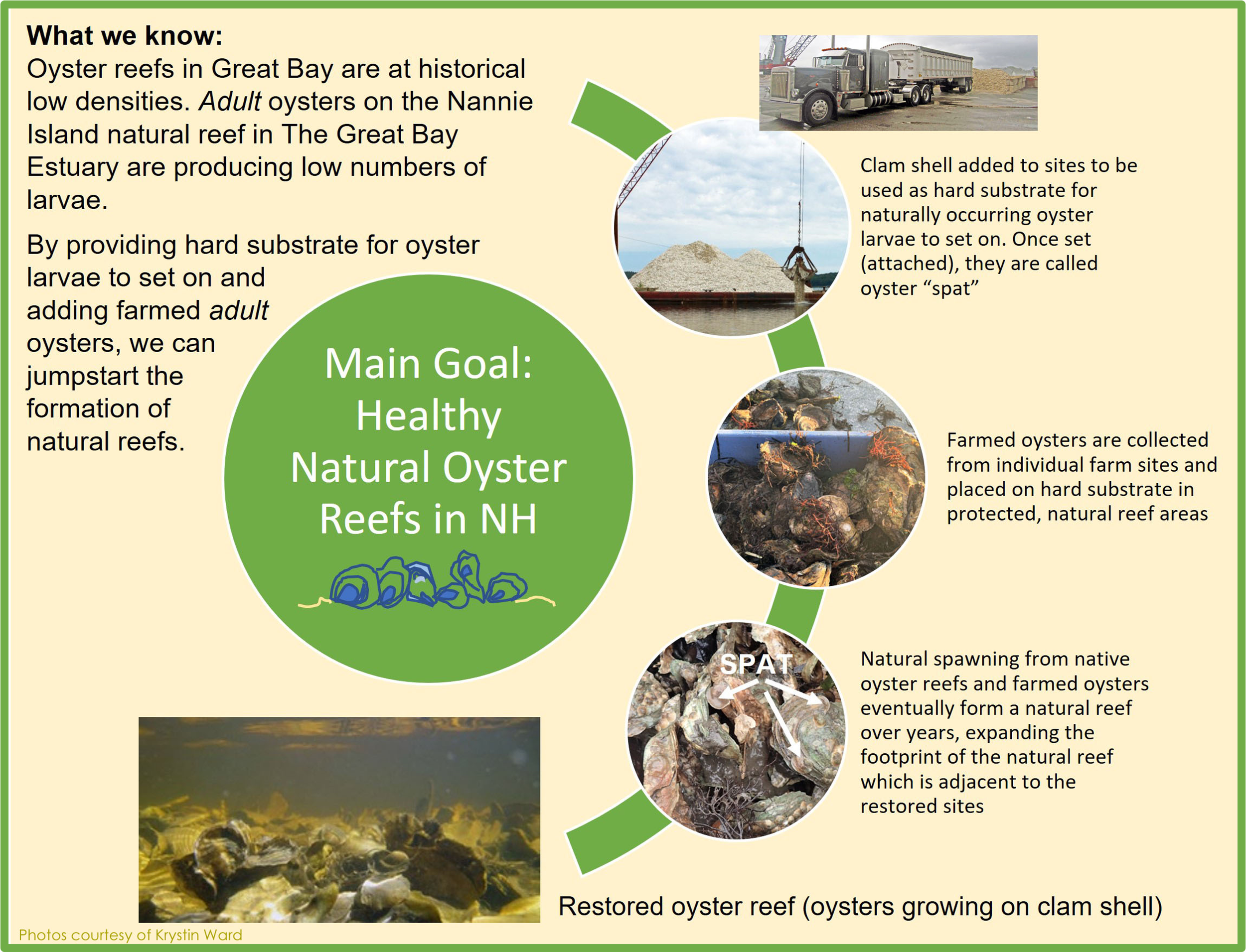
oyster reef Restoration Process Summary
Restoration activities
As we have done in other locations around the Great Bay Estuary since 2010 , we will hire a barge in the spring to place seasoned clam shell along the bottom of the Estuary within our permitted restoration sites. This is a collaboration between the Natural Resources Conservation Service (NRCS) and NH oyster farmers and all work is done in subtidal water. We obtain 5-10 year DES permits to work in carefully selected areas (2.5-7 acres) and we will work it these areas year after year if we find that an area is in need of more shell (cultch=hard substrate).
The shell will be placed next to an existing oyster reef to act as a base (cultch) for oyster larve to settle on from naturally spawning oysters each year. Oyster spat-on-shell provided by the University of New Hampshire (in colaboration with The Nature Conservancy) will also be used to seed the shell base in some areas. This new reef, once established will recover lost filtration and habitat services of oysters in the Great Bay Estuary.